
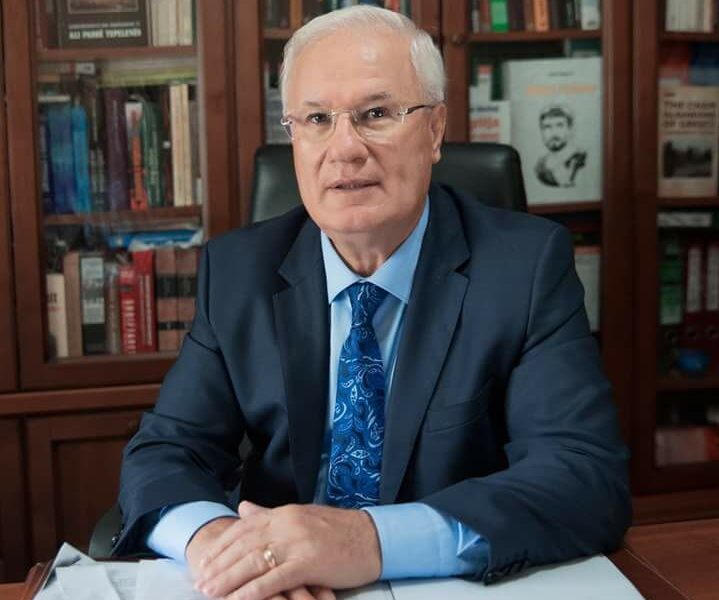
By Prof. Dr. Paskal Milo
The three decades following the end of the Cold War were characterized by the dominance of an international order led by the United States and its Western allies. Based on multilateralism, an open economy, international institutions, and the promotion of liberal democracy, this order created a relatively stable environment for political and economic transformations in Europe, including the Western Balkans. For the countries of the region, Euro-Atlantic integration became the central axis of foreign policy and domestic reforms.
In recent years, this order has been facing profound structural challenges. The rise of China as a global power, the return of Russia as a revisionist actor, the relative weakening of American hegemony, the fragmentation of the international system, and the intensification of strategic rivalries have created a new configuration of international relations. The war in Ukraine, military escalations in the Middle East, technological competition, energy crises, and the weakening of the consensus on globalization have accelerated the transformation of the international order.
Under these circumstances, the Western Balkans has acquired renewed strategic importance. The region is no longer merely an object of the European Union’s enlargement policy, but also an area where the interests of the great powers intersect. Alongside the European Union and the United States, Russia and China are active in the region. This multidimensional competition influences political, economic, and security processes in each of the Western Balkan countries.
At the same time, the European Union itself is facing strategic dilemmas concerning the pace and model of enlargement, while the war in Ukraine has brought enlargement back to the center of the European geopolitical debate. For the first time in many years, enlargement is viewed not only as an instrument of democratic transformation but also as a strategic necessity for the security and geopolitical consolidation of the continent.
This study analyzes the impact of the transformation of the international order on the Western Balkans, focusing on three dimensions: competition among the great powers, the prospects for European integration, and the implications for regional stability. The central argument is that developments in the Western Balkans can no longer be explained solely through the region’s internal dynamics; they must also be analyzed as part of the broader rivalry over the configuration of the new international order. Nevertheless, external competition does not reduce the countries of the region to passive objects: their institutional capacity and strategic choices determine, to a significant extent, how external influences translate into political, economic, and security consequences.
Transformation of the International Order
The concept of international order refers to the totality of norms, institutions, rules, and power relations that organize relations among states during a particular historical period. The most prominent scholars of our time have contributed a body of ideas and relationships on this issue in the form of a structured debate. Henry Kissinger defines international order as “an agreement about the nature of just arrangements and the permissible distribution of power,” emphasizing that international stability depends on the balance between legitimacy and power.[1]This means that an order is stable only when there is correspondence between the structure of power and its acceptance by the principal actors. However, achieving this on a universal scale has proved impossible: “there has never been a truly global ‘world order’”; there has been no consensus “among the major actors about the rules and limits guiding this process, or its ultimate destination.”[2]John Ikenberry argues that the liberal order established after 1945 rested on multilateral institutions, common rules, and the voluntary restraint exercised by the United States itself in the use of power. According to him, this order was based not only on American military superiority but also on the ability to establish institutions that generated legitimacy and long-term cooperation.[3]
In contrast to this approach, John Mearsheimer argues that the return of competition among the great powers is a logical consequence of the anarchic structure of the international system. According to offensive realism, states continuously seek to increase their power, and there is no international order capable of eliminating strategic rivalry.[4]The war in Ukraine and US-China competition are interpreted by this school as manifestations of the return of classical power politics.
Graham Allison describes the US-China rivalry as presenting a high probability of strategic confrontation, although this does not necessarily imply war. Rather, it is an indication of the intensification of economic, technological, diplomatic, and military competition that characterizes the international system.[5]
This debate has also been enriched by the contributions of scholars who argue that the international system is entering a phase of complex multipolarity, in which the influence of middle powers and regional actors is increasing alongside that of traditional powers. In this environment, the Western Balkans represents not merely a periphery of Europe but an area in which the competing strategies of different international actors are being tested.
This theoretical approach is particularly relevant to the analysis of the Western Balkans. Historically, the region has been an area where changes in the structure of the international system have been reflected more rapidly than in many other regions of Europe. Even today, the processes of European integration, rivalry among the great powers, and security developments are interdependent and cannot be analyzed separately. Therefore, the transformation of the international order is not merely the background against which developments in the Western Balkans take place, but a direct explanatory factor in the political, economic, and strategic dynamics of the region.
Unipolarity in the international system did not prove to be a permanent condition. Since the beginning of the twenty-first century, a series of structural developments have gradually begun to alter the distribution of power in the international system. These processes have not yet produced a consolidated new order, but they have created a transitional phase in which elements of the liberal order coexist with new forms of strategic competition. The current transformation should not be viewed merely as a transition from unipolarity to multipolarity. It involves a broader reconfiguration of international relations, in which not only power relations are changing, but also the ways in which security, economic development, technology, and international legitimacy are conceptualized.
Henry Kissinger observes that periods of transition are usually the most unstable periods in international history, because the existing order loses its ability to generate consensus, while the new order has not yet been consolidated. Under these circumstances, the tendency toward rivalry, strategic miscalculation, and regional conflicts increases.[6]
A similar interpretation is offered by Graham Allison, who, referring to the concept of the “Thucydides Trap,” argues that confrontations between a dominant power and a rising power have historically been a source of major tensions. Although history cannot repeat itself mechanically, US-China competition constitutes the most significant example of this dynamic in the twenty-first century.[7]
Nevertheless, analysis based solely on the balance of power is no longer sufficient. An important characteristic of the new order is the expansion of the areas of competition. Whereas during the Cold War rivalry was concentrated primarily in the military and ideological dimensions, today it unfolds simultaneously in the economy, technology, energy, global supply chains, artificial intelligence, digital infrastructure, cyberspace, and control over critical resources. In this sense, strategic competition among the great powers has become multidimensional.
At the same time, organizations and forums such as BRICS, the G20, the Shanghai Cooperation Organization, and other multilateral initiatives are gaining greater weight in discussions on global governance. This does not mean that they are replacing the institutions established after 1945, but rather that the international system is becoming more pluralistic and less concentrated around a single center of power.
In this context, Amitav Acharya argues that the future order will not be dominated by a single hegemon, but by the coexistence of several centers of power and different models of development, which he calls the “global multiplex,” in which authority, power, and influence are distributed among a larger number of state and non-state actors. According to him, the main challenge is not only the redistribution of power but also the ability of international actors to build new forms of cooperation in an increasingly fragmented environment.[8]
From this perspective, it would be wrong to interpret current developments as a simple return to the bipolar logic of the Cold War. Although the US-China rivalry constitutes the principal axis of world politics, the international system of the twenty-first century is characterized by a much larger number of influential actors, deeper economic interdependencies, and transnational challenges that cannot be managed solely through the traditional logic of the balance of power.
This situation has direct consequences for the peripheral regions of the international system, including the Western Balkans. The changing global order is not an abstract process; it affects the strategic orientations of states, competition for political and economic influence, infrastructure investments, and the ways in which the great powers project their interests in the region.
Precisely for this reason, analysis of the implications for the Western Balkans should not be limited to describing the policies of external actors. It must examine how the transformation of the international order is changing the strategic environment of the region itself and, at the same time, the range of choices offered to or imposed upon its countries.
The dynamic transformation of the international order after 2022 from a liberal order into a more competitive and multipolar system, despite the progress it brings, also carries increased and unknown threats and risks for the countries of the Western Balkans. Yet it should not necessarily be judged solely from this perspective. The peoples of the Western Balkans should not remain hostage to the old policies of the Great Powers or to fatalistic self-subordination arising from their position as victims in the great geopolitical game now unfolding. At present, they have an opportunity to increase the strategic weight of the region, to make a transition from a “powder keg” to a modest local contributor to the new global order taking shape. However, for the Western Balkans to give itself the chance of such a future and of a constructive role in regional and European security, it must preserve and strengthen its Euro-Atlantic orientation and regional cooperation, as well as develop greater state capacities in the fields of security, technology, and the economy.
Global geopolitical changes have also brought a new approach to the strategic function of the Western Balkans within the Euro-Atlantic architecture and in competition among the great powers. The region is emerging as a strategic nexus linked simultaneously to three processes: the transformation of the European security architecture following Russian aggression against Ukraine, the global US-China rivalry, and the European Union’s effort to turn enlargement into a geopolitical instrument.
The Western Balkans can no longer be treated merely as a periphery or as an object of competition among the great powers. Its importance within the new European security architecture has increased, while the very concept of regional security is changing: alongside traditional ethnopolitical conflicts, it is increasingly influenced by technological, energy, cyber, infrastructure, and information competition.
Opportunities exist for the Western Balkans to play a more representative role in advancing regional interests under the current circumstances of global developments, but they nevertheless remain limited. In an atmosphere of comprehensive strategic competition, the Great Powers have returned to the Western Balkans, each with old or new objectives, and they tend and seek to influence regional politics and to shape and adapt the positions of the respective countries in accordance with their interests.
American Strategy
The United States has been the most important international actor operating in the Western Balkans since the end of the Cold War. It contributed substantially in several countries to the establishment of democracy and the construction of the security architecture following the disintegration of the former Yugoslav Federation. During the 1990s, through its intervention in the war in Bosnia and Herzegovina and the signing of the Dayton Agreement (1995), its leadership of the political campaign and NATO air bombardment against the military infrastructure of Slobodan Milošević’s Serbian-Yugoslav regime, which led to the liberation of Kosovo (1999), and its support for the process that brought about the signing of the Ohrid Agreement (2001) in North Macedonia, the United States was the principal and irreplaceable power that set the region on the path of democratic development, the construction of pluralistic and multiethnic societies, respect for human rights and freedoms, minority rights, and the principles of the market economy.
The 1990s are regarded as the first phase of American policy in the Western Balkans, which contributed to ending the bloodshed and laying the foundations for democratic and multiethnic coexistence. After 2000, American policy in the region focused on state-building and democratic consolidation, Kosovo’s independence, and the normalization of relations with Serbia. During this phase, the United States also encouraged the accession of several countries to NATO, including Albania, Montenegro, and North Macedonia. It likewise supported their integration into the European Union.
The American presence and engagement in the Western Balkans during this period was not always uniform. After 2008, American attention to the region diminished because of other, larger and more important interests emerging in other parts of the world, such as the Middle East, or because of other strategic competitors such as China and Russia’s return with new and broader ambitions. During these years, American administrations rightly regarded the European Union as the principal actor in the Western Balkans through its integration policy. But Brussels possessed neither the power nor the full will and cohesion to assume sole responsibility for guaranteeing the region’s stability; this required a continuing transatlantic partnership and direct American engagement.[9]
In the strategy of the United States, the Western Balkans has always been treated as an integral part of the European continent, as part of the process of European and Euro-Atlantic integration, and as part of a broader front of growing geopolitical competition with other international actors. For decades, the United States and the European Union have cooperated in the region according to the formula: Washington guarantees security, Brussels offers transformation and membership. This division is now changing in part. The United States is devoting greater attention to the economy, energy, and infrastructure, while the EU is becoming more active in security and defense.
In principle, American and European policies are complementary: both support stability and oppose disruptive Russian influence and the growth of Chinese influence; both Washington and Brussels seek the normalization of Kosovo-Serbia relations and respect for the territorial integrity of Bosnia and Herzegovina. Nevertheless, the two approaches are not identical. The EU is a transformative and normative power; the United States is increasingly a strategic, security, and transactional power. The United States is not withdrawing from the Western Balkans, but seeks a greater sharing of the costs and responsibility for stability with its European allies and the states of the region.
Broadly speaking, the United States has maintained consistency in its positions toward the Western Balkans despite changes of administration in the White House. Yet there have also been differences in its positions, dictated by programmatic perceptions, domestic political polarization, and shifts in American foreign-policy priorities toward other parts of the world in accordance with the strategic interests of the moment. In fact, the American diplomatic and security presence there today is more limited than it was after the conflicts of the 1990s. In recent years, American policy in the region became more selective and pragmatic, avoiding a direct transformative engagement.
Russian aggression in Ukraine and the global intensification of strategic competition among the great powers were also reflected in Europe and the Western Balkans as part of it. The American administrations of the four years 2022–2025 continuously followed the dynamics of developments in the region, but there was no qualitative change compared with the recent past.
In 2026, an important change occurred in American policy toward the Western Balkans, assessed as a “strategic repositioning” or a reformulation of the manner of engagement. This change, which does not affect the essence of American engagement in the region and does not imply withdrawal, was announced in May of this year in the report sent by the Department of State to Congress entitled “United States Policy to Promote Regional Stability and Prosperity in the Western Balkans.”[10]
The report regards the region as directly important to American security and economic interests. It signals a different kind of United States engagement in the Western Balkans, shifting from a policy of state-building toward stability, the construction of mutually beneficial partnerships, and the protection of concrete strategic and economic interests.[11] The United States continues to adhere to its principal objectives in the region: preventing the recurrence of conflicts and the region’s falling under dominant Russian or Chinese influence, maintaining its links with NATO and the West, ensuring stable economic and energy corridors, and avoiding crises that would require new American interventions. What is changing is the means of achieving these objectives: a transition from the paradigm of the “transformation of the Western Balkans” to that of the “strategic management of stability and partnerships.”
According to this report, American policy in the Western Balkans will rest on three pillars: regional stability, viewed as a precondition for all other American interests and encompassing the preservation of peace in Bosnia and Herzegovina, management of Kosovo-Serbia relations, security in Kosovo through KFOR, strengthening NATO partners, preventing ethnic conflicts, and opposing destabilizing actors; economic and trade cooperation, with priority given to areas such as investment, energy, infrastructure corridors, trade, American companies, and supply-chain security; and countering Russian and Chinese influence. Russia is seen as an actor that seeks primarily to exploit the region’s weaknesses, such as corruption, ethnic divisions, weak institutions, and energy dependence, without offering a development model. China, from the American perspective and unlike Russia, does not seek to destabilize the region but builds influence through state loans, trade, infrastructure, technology, and soft power.[12]
NATO remains the principal institutional pillar of American strategy in the Western Balkans. Countries of the region—Albania, Montenegro, and North Macedonia—are members of NATO and allies of the United States. The accession of these three states to the North Atlantic Treaty Organization has significantly changed the strategic map of the region. In Kosovo, the United States contributes troops to KFOR, which guarantees a safe environment and freedom of movement. It also assists the development of the multiethnic Kosovo Security Force and its transformation into a professional territorial defense force.
One of the central objectives of American policy in the region is the normalization of relations between Kosovo and Serbia. The Department of State’s report of May this year reaffirms Washington’s consistent position encouraging both sides toward a sustainable, negotiated normalization agreement.[13] To achieve this goal, American policy has become more pragmatic compared with the years following Kosovo’s declaration of independence. Although Kosovo remains a strategic partner of the United States, Washington has not always agreed in recent years with the Kosovo government’s approach to certain domestic-policy issues or its positions toward the Serbian community, particularly the lack of consultations before important decisions.
The United States has also adopted a more transactional and pragmatic approach toward Serbia in recent years. In seeking a sustainable solution for regional stability, it develops relations with Belgrade despite serious differences over Kosovo, Russia, and other strategic issues.
There is another fundamental change in the new American strategy for the Western Balkans: it calls for international institutions to have a more limited role in the functioning of the states of the region. The emphasis shifts toward the responsibility of local elites, mutually beneficial agreements, concrete American interests, self-sustainability, investment, and trade.[14] The message is clear: the costs and responsibility for the region’s stability should be shared to a greater extent with its states and European allies.
The current American strategy is not a repudiation of its predecessor. It contains strong elements of continuity, such as NATO’s role, the commitment to respect the Dayton Agreement, support for Kosovo’s security and the normalization of Kosovo-Serbia relations, cooperation with allies, and the fight against corruption, organized crime, and illegal narcotics trafficking. The Department of State’s June report described organized criminal groups in the Western Balkans as a direct threat to the national interests of the United States.[15] But the new strategy also brings changes: less state-building, less direct political transformation, greater emphasis on stability, the economy, energy, and infrastructure, more competition with China and Russia, and greater responsibility on the part of local partners.[16]
In conclusion, a broad comparative analysis of the phases of American policy in the Western Balkans after the Cold War would indicate that whereas American policy in 1990–2000 sought to reconstruct the political order, the policy of 2026 seeks to make it a stable order, advancing economically, connected to the Western security architecture, and resistant to penetration by rival powers.
Russian Interests
Another power interested in the Western Balkans, with a constant presence there since the early 1990s, is Russia. Its policy in the region differs in its objectives and the means it employs; it is different from American policy in particular and Western policy in general. The characteristics of this policy are the product of history, cultural and religious affinities, specific economic factors, and nationalist, regional, and international interests and circumstances.
It must be made clear at the outset of the analysis that the Western Balkans is not among the priorities of Russia’s foreign policy today. Public opinion and propaganda have created the opposite impression, and not by chance. Russia has neither had nor now has the objectives and capacities to make the region a priority interest. No such objective is found in official Russian documents concerning the Western Balkans. This difference between perception and the place and role of this region in Russian foreign policy has been thoroughly argued by scholars.[17]
The fact that the Western Balkans does not constitute an objective in itself does not mean that Moscow has withdrawn, is inactive, or lacks clear aims in the region. On the contrary, it has several, pursued simultaneously or alternately; some are strategic and others tactical. Taken as a whole, Russian policy in the Western Balkans serves as an instrument to increase Russia’s weight in the European security architecture and in its relations with the West.[18]
Traditionally, Russia’s interest in the Western Balkans has been motivated by historical ties, Orthodoxy, and Pan-Slavism. This has been and remains one of the central axes of Russian policy in the region, particularly in relations with Serbia, Republika Srpska, Montenegro, and North Macedonia. During the 1990s and especially after 2010, Russian religious diplomacy expanded in the region, and the implementation of this strategy is based on the large Orthodox communities living in several countries of the region: in Serbia, 88 percent of the population is Orthodox; in Montenegro, 72 percent; in North Macedonia, 65 percent; and in Bosnia and Herzegovina, 31 percent.[19]
In the past, these factors carried greater weight and played a larger role in Russian policy, but today, although they remain important, they have been relegated to a secondary position by pragmatism and opportunism, which combine Moscow’s political, economic, and strategic interests with those of local political elites.[20] Russia pursues a relatively low-cost strategy; it neither makes major investments nor attempts to direct it in a centralized manner. It exercises a “diffuse influence,” meaning influence in many directions and through various instruments.[21]
Scholars have noted a disproportion between Moscow’s political influence and its use of material resources in the Western Balkans. Moreover, they have sought to analyze and explain this asymmetry even under conditions in which Russia’s political, economic, and military resources have diminished following its aggression against Ukraine in 2022.
Usually, the economic factor, investments, influence, and loans have a considerable political impact on the countries receiving them. Yet Russia has a modest economic presence in the Western Balkans, mainly in Serbia and Republika Srpska in the energy sector, and in Montenegro in real estate, tourism, and hospitality. Until the war in Ukraine, Western Balkan countries exported to Russia between 2.8 and 4.2 percent of their total export volume. In 2024, merchandise-trade data show that Serbia remained Russia’s principal economic partner in the Western Balkans. Serbian exports to the Russian market reached approximately $962 million, while imports from Russia amounted to $1.39 billion; in Bosnia and Herzegovina, exports to Russia were $51.2 million and imports approximately $183.9 million; in North Macedonia, the corresponding figures were $47.4 million and $126.6 million. Albania and Montenegro had much lower levels of exchange, particularly in exports. All Western Balkan countries recorded trade deficits with the Russian Federation.[22]
These modest figures clearly demonstrate the asymmetry between Russia’s economic presence and its political influence in the Western Balkans. Other factors determine the strength of Russian political influence in the region, including internal weaknesses and the quality of democracy there. Moscow exploits local actors who, in order to preserve and consolidate their power, violate democratic rights and freedoms, undermine institutions, and shape authoritarian forms of governance.[23] In exchange for the support provided to them, individuals and regimes such as Vučić’s in Belgrade or those in Republika Srpska allow Russia extensive room for political influence. Aleksandar Vučić and Milorad Dodik are frequent visitors to Vladimir Putin at the Kremlin.
Russian policy in the Western Balkans has been characterized by a constant disruptive function.[24] For a long time, it sought, in various forms and ways, to obstruct NATO enlargement in the region and the accession of Montenegro and North Macedonia to the organization. It has likewise done everything possible to obstruct or delay these countries’ integration into the European Union. It has amplified all the difficulties and dissatisfaction that have arisen during the region’s Euro-Atlantic integration, because this process objectively narrows Russia’s scope for action in the Western Balkans.
Russia, not only because of its traditional engagement but also because it is a permanent member of the United Nations Security Council, has actively participated in the management of conflicts in the Western Balkans and efforts to resolve them. Following the beginning of the disintegration of the Yugoslav Federation in 1991, armed conflicts broke out in the region between Serbia/Yugoslavia and its constituent republics, which sought to secede and establish independent states, mainly on ethnic grounds. Thus began and ended the fighting between Croatia and the reduced Yugoslav federation dominated by the Serbian regime of Slobodan Milošević, which led to Croatia’s independence, as well as that of Slovenia.
The newly opened Yugoslav “Pandora’s box” continued with the war in Bosnia and Herzegovina (1992–1995), the conflict in Kosovo (1998–1999), and the fighting in the spring and summer of 2001 in North Macedonia. In all these conflicts, Russia was an active frontline Power in the name of Pan-Slavism, seeking to preserve as much as possible the collapsing Yugoslav federal structure and to defend Serbia’s interests. It participated in the talks leading to the 1995 Dayton Agreement for Bosnia and Herzegovina, took part in its implementation force under a special arrangement, opposed solutions that might be perceived as imposed upon the Serbs, and secured a role in the post-conflict security architecture. Throughout the years following the signing of the Dayton Agreement, Moscow has remained an open advocate of Serbian nationalist circles in Banja Luka. Its strategic interest is incompatible with a stable and functional Bosnia and Herzegovina, favoring instead a permanent source of tension and crisis that justifies and “legitimizes” its presence in the region.
Geopolitically, Russia opposed the 2018 Prespa Agreement between North Macedonia and Greece on the name issue. It viewed this agreement as a prerequisite for North Macedonia’s NATO membership, a weakening of Russian positions in the country from which to influence its strategic orientation, and an expansion of the Western institutional presence in the region.
Russia has pursued an even more active policy against Montenegro’s Euro-Atlantic integration. With well-known historical, cultural, and religious ties, investments and capital particularly in tourism and real estate, and relations with pro-Serbian political forces in that country, Moscow nurtured hopes that it could prevent Montenegro’s accession to NATO and also to the EU. It has been alleged that in 2016 attempts were made, with the participation of several Russian citizens, to carry out a coup d’état in the country, with the central objective of preventing its NATO membership. This attempt failed, and Montenegro joined the North Atlantic Treaty Organization in June 2017. Russia experienced this as a loss of its influence in a strategic area of the Western Balkans.
Kosovo occupies a special place in Russia’s policy toward the region. It is the main political foundation of Russian-Serbian relations.[25] Russia has not recognized Kosovo’s independence and continues to regard it as part of Serbian territory; it supports UN Security Council Resolution 1244 and blocks Kosovo’s membership in the United Nations and other international institutions. Through this position, Moscow exerts influence over Serbia’s foreign policy, conditioning its stance on other matters in order to secure Belgrade’s support or neutrality. Fundamentally and strategically, Russia is not interested in resolving the Serbia-Kosovo conflict, not only because it keeps Belgrade dependent but also because it provides an additional justification for its continued presence, to the extent possible, in the Western Balkans.
Kosovo in Russian policy goes beyond solidarity with Serbia. It has a regional but also a European dimension. Kosovo remains a security issue as long as its international status has not been definitively settled and KFOR troops and representatives of international security institutions are stationed on its territory. Moscow frequently uses Kosovo as a precedent to justify its interventions in Abkhazia, South Ossetia, and especially Crimea in 2014. Yet it remains contradictory in its positions toward Kosovo when it interprets the issue as a violation of the principles of sovereignty, non-interference in internal affairs, and respect for Serbia’s territorial integrity.
Objectives of the Chinese Approach
Another Great Power currently present in the Western Balkans is China. There has been and continues to be a discrepancy between perceptions of the Chinese presence and the reality in the region. Scholars remain divided on this issue, although they have also reached similar conclusions regarding certain developments.
The Western Balkans is not a strategic priority for China, but nevertheless occupies an important place in China’s global approach to expanding its economic, political, and diplomatic influence in Europe. The Chinese approach combines economic pragmatism, political neutrality, and the development of long-term projects in the region. Within China’s strategic objectives, the Western Balkans is regarded as a “bridge” toward the European Union, a logistical hub of the Belt and Road Initiative (BRI), and part of the maritime corridor linking the port of Piraeus with Central Europe; its importance therefore lies not in market size but in its economic geography.[26] To achieve its strategic objectives, China employs several instruments. The first among them is economic diplomacy, which includes state loans, infrastructure investments, state-owned companies, development banks, and industrial partnerships.
The second instrument employed for years is the “One Belt, One Road” Initiative, which scholars describe as “an ambitious, transformative plan, conceived by China to project its growing economic and political power throughout the world.”[27] Through its well-known “17+1” platform, this initiative developed Eurasian transport and energy links, global supply chains, political dialogue, investment, university cooperation, and cultural exchanges, with the aim of “serving the broader regional ambition of building a Sinocentric Eurasian order.”[28]
Officially, China does not proclaim political objectives in the Western Balkans. It advocates cooperative relations, the preservation of regional stability, long-term partnerships, non-interference in internal affairs and political disputes, and mutual support in international organizations. Unlike Russia, China opposes border changes, extreme nationalist movements, and political destabilization. Beijing also asks the countries of the region to respect the “one China” policy, not to recognize Taiwan, and to show understanding for the Chinese concept and practice of human rights.
China’s presence and influence in the Western Balkans is a complex process determined by different factors: China’s own objectives, the will and interests of local governments and political elites, and the attitudes or competition of other Powers in the region. Analyses of this process by different scholars reveal two approaches: a maximalist one that regards Chinese economic and political influence as threatening the region’s future and its Euro-Atlantic orientation, and a minimalist, realist one that sees a normal relationship of mutual interest.
Chinese policy in the Western Balkans is not uniform. It is a strategy differentiated according to each country’s geographical importance, economic capacity, foreign-policy orientation, and the willingness of its political elites to cooperate with Beijing. Serbia is the principal hub of this strategy in the region, not only because of close political relations between Beijing and Belgrade but also because of its position along the land corridors connecting the Mediterranean with Central Europe. This was confirmed during Chinese President Xi Jinping’s visit to Belgrade on May 8, 2024, when the Chinese leader called on the two countries to “deepen strategic cooperation,” while Serbian President A. Vučić confirmed that Serbia would “maintain close strategic coordination with China in multilateral forums.”[29]
China’s current economic presence in the region has sparked a debate encompassing both approaches mentioned above. Before analyzing their arguments, it is useful to establish the actual scale of this economic presence. According to reliable European sources, between 2009 and 2021 China invested directly or through other contributions approximately €32 billion, of which around €10.3 billion was in Serbia.[30] China’s economic presence is substantial compared with that of other international actors, but it falls far short of the scale of support that the Western Balkan countries receive from the European Union. Chinese investments are visible where they have been made—in Serbia, Bosnia and Herzegovina, and Montenegro. China offers rapid financing without political conditionality, but this cannot be compared with the European Union’s weight in Western Balkan economies through trade, foreign direct investment, banks, loans, grants, supply chains, remittances, regulatory standards, and the prospect of entering the single market.
The facts make it difficult to believe that China today represents an economic alternative comparable to the EU in the Western Balkans. It does not seek to replace the EU in the region, nor does it oppose the European integration of its countries; rather, it is a competing power that seeks its own sphere of economic interests there and to build gradual, long-term influence through the economy.[31]
Nevertheless, this has not prevented political as well as academic debate over China’s economic presence in the region. Some scholars have advanced the thesis of an “economic conquest” of the Western Balkans by China, arguing that growing economic dependence serves Chinese strategic interests, challenges the EU’s normative power, and weakens the agenda of democratic reforms in the region.[32] Opponents of this thesis argue that China’s influence is overestimated, that it is an important but not dominant actor, that its economic presence remains very limited, and that perception does not correspond to reality.[33]
Another issue in the academic debate is whether China exerts political influence in the Western Balkans. There is no public Chinese document proclaiming a political strategy for the Western Balkans, but that does not mean Chinese political objectives have been or are absent from the region. No great power can be neutral with regard to such objectives in its external relations, particularly in regions and countries of strategic interest. Tactics and instruments for achieving them may differ, but the objectives remain the ultimate goal. Chinese policy in the Western Balkans does not seek direct domination of the region but the gradual shaping of its political orientation in the service of broader regional, European, and strategic interests connected with the changing international order.[34]
Analysts of China’s relations with the countries of the Western Balkans have concluded that Beijing has “a strategy of building political support.” Others argue that “Beijing’s long-term objectives are strategic, political and increasingly ideological.”[35] Serbia represents the most advanced form of this strategy, as was confirmed during President Xi Jinping’s visit to Belgrade in May 2024. The foundations of the Strategic Partnership between the two countries lie not only in economic and trade cooperation and “soft power,” but also in the mutual support that both sides provide on issues of domestic political importance and those of priority importance in their foreign policies. Belgrade has an interest in China’s non-recognition of Kosovo’s independence and in its statements supporting Serbia’s sovereignty and territorial integrity and the resolution of the issue on the basis of UN Security Council Resolution 1244.
Some scholars have concluded that any other solution outside this framework that recognizes Kosovo’s statehood is unacceptable to China because it could create precedents implicating Beijing in questions of national sovereignty. Accordingly, in their view, although China does not oppose the Serbia-Kosovo dialogue, it has its own approach that distinguishes it from the Western one: it regards the dialogue as a process of preserving the status quo, as “a risk that needs to be managed,” but not resolved or normalized within the framework of European integration and the dialogue initiated by the European Union.[36]
The Chinese approach in the Western Balkans is not opposed to the region’s European integration, and there is no public Chinese document supporting such opposition. The European Union is the main partner of the Western Balkan countries in terms of investment, loans, aid, and trade and, above all, maintains contractual relations with them at various levels aimed at full membership in the European family. Yet the difficulties encountered in this process, owing to internal reasons, delays in meeting European standards and criteria, corruption, or obstacles arising from the EU’s own development, have resulted in a slow pace of integration in the region, dissatisfaction, and mistrust. This led countries of the region, and particularly their governing elites, to welcome the BRI and regard it as a faster development alternative with more favorable terms. They also saw it as an instrument of pressure in negotiations with Brussels.[37]
China has not conveyed messages indicating that it seeks to replace the American presence in the Western Balkans or to challenge NATO there on security matters.[38] The Chinese strategy recognizes the limits of lawful competition, the scope of action, and the instruments employed in its implementation.
The European Union: Enlargement as a Geopolitical Instrument
The Western Balkans today occupies a particular place in the European Union’s strategy to consolidate its role as an international political, economic, and geopolitical actor. The EU faces a considerable challenge in the Western Balkans: to demonstrate that it is capable of transforming its economic, normative, and institutional superiority into lasting strategic influence.
Russian aggression against Ukraine marked a turning point in the EU’s foreign, security, and enlargement policies toward the Western Balkans. In July 2022, the European Council approved the Negotiating Frameworks for opening accession negotiations with Albania and North Macedonia on the basis of a political decision it had taken as early as March 2020.[39] In December 2022, Bosnia and Herzegovina was granted EU candidate status, followed in March 2024 by the decision to open accession negotiations with it.[40]
During these years (2022–2026), the European Union developed and is in the process of fully completing a strategy that responds to contemporary geopolitical challenges. A principal component of this strategy is the new enlargement policy, shaped through the strategic documents of the EU’s central institutions, particularly over the last two years (2025–2026), such as the Communication on EU Enlargement Policy of November 4, 2025; the Declaration of the EU–Western Balkans Summit in Brussels on December 17, 2025; the European Parliament Resolution of March 11, 2026 on the EU Enlargement Strategy; and the European Council Conclusions of June 18–19, 2026.[41]
The greatest change in the EU’s new strategy is that enlargement is no longer treated only as a technical policy to encourage progress among candidates, but has become a geopolitical and security instrument. The Brussels Declaration of December 17, 2025 calls enlargement a “geostrategic investment in peace, security, stability and prosperity.”[42] On March 11, 2026, the European Parliament defined enlargement as “a strategic response to the evolving geopolitical reality.”[43] Consequently, a qualitative change has occurred: enlargement is no longer seen merely as a reward for reforms, but as a strategic interest of the European Union itself.
The new strategy proceeds along two tracks, or develops through two parallel processes. The first track entails classical accession negotiations, including fulfillment of the 1993 Copenhagen criteria, respect for the European Union acquis, chapters and clusters, the rule of law, democratic institutions, the fight against corruption, and the criterion of individual merit. The second track, which also constitutes the greatest innovation of this new strategy, is what is known as gradual integration before membership. In its November 2025 communication, the European Commission advocated “gradual integration through the creation of stronger links between the EU and candidate and potential candidate countries … by offering them participation in certain policies and programmes before EU membership.”[44] These include SEPA (the Single Euro Payments Area), roaming (the use of mobile telephone services abroad), green corridors, energy, transport, the digital market, and others. In short, the new strategy is integration before membership, but not instead of membership.
The strategy requires reforms not only from the candidate countries but also from the European Union itself, including its decision-making system. Thus, there is a dual conditionality: candidates must be ready for the EU, but Brussels must also be ready for the candidates and reform itself.
The EU’s current doctrine on enlargement has been unified at the strategic level but only partially at the institutional and political levels. The political mechanism for making it irreversible is still unclear. It has several internal contradictions: geopolitics versus meritocracy; fulfillment of standards and criteria versus the national veto (in bilateral relations); gradual integration versus the risk of remaining in the membership “waiting room”; and differentiation among candidate countries in the process.
Until a few years ago, EU policy was described as “enlargement fatigue.” At present it can be regarded as geopolitical enlargement with gradual integration and strict conditionality. This is the formula that brings together the documents of the Commission, the European Council, and the European Parliament in 2025–2026. In conclusion, it may be said that the EU today has a more coherent strategy for bringing the Western Balkans closer than a fully developed strategy for admitting it.
The instruments for bringing the region closer exist, have been made known, and have begun to be implemented. They include the Growth Plan, the Reform and Growth Facility, the Single Market, SEPA, roaming, infrastructure, financing, and reforms. But the mechanism for the final moment of accession has yet to be determined. It depends on three factors: political unanimity in decision-making, the EU’s institutional readiness, and national ratifications. Today the question is no longer whether the EU will admit the Western Balkan countries as members. The answer was given at the Thessaloniki Summit in 2003 and has been repeated at other EU summits, including those of December 2025 and June 2026. Yet it remains an answer in principle as long as the EU itself has no accession timetable, has not undertaken its internal reforms, and, in particular, has not eliminated national vetoes.
Despite the specificity of its relations with the countries of the Western Balkans, the European Union is still formally an international actor, an external power. But it differs qualitatively from the other powers because it has the strongest structural position in the region. The Western Balkans is an internal geopolitical space of Europe. Geographically, it is almost entirely surrounded by EU territory, and the EU is the only major international actor that can offer the countries of the region not merely partnership but membership in its own political, legal, and economic structure. This is the EU’s fundamental strategic advantage over the other powers in the region. At the EU–Western Balkans Summit in Tivat on June 5, 2026, European Council President António Costa described the membership of the region’s countries as a “decisive geopolitical investment.”[45]
The EU has several other advantages in the Western Balkans, the most important and tangible of which is its economic superiority. The EU is the Western Balkans’ principal trading partner, investor, and donor. It accounts for 62 percent of the region’s total trade volume. In 2025, trade in goods between them reached €88 billion, while trade in services amounted to €20 billion in 2024, twice the volume of ten years earlier. For 2021–2027, the EU has made €9 billion in grants available to the Western Balkan countries, which are expected to generate €29 billion in investment. The Growth Plan, whose implementation began in 2024, envisages disbursing €6 billion to the six countries of the region by 2027, including €2 billion in grants and €4 billion in loans. A comparison of the figures in these areas demonstrates that neither China, Russia, nor the United States comes close to the EU in the degree of structural economic integration with the region. This fact provides it with a powerful instrument of influence: market power.[46]
Another advantage of the EU is its transformative power. It is an institutional model that, through the accession process, influences every level of the states of the candidate countries. None of the other powers present in the region possesses a comparable instrument. From this perspective, the EU’s power is transformative and not merely influential.
The EU’s third advantage in the region is the prospect of membership, which is also regarded as its most powerful geopolitical instrument. The European Parliament’s resolution of March 11, 2026 described enlargement as “one of the EU’s strongest geopolitical and foreign-policy tools.” The membership of the six Western Balkan countries in the EU narrows the scope for strategic competition by Russia and China in the region.[47]
The fourth advantage is provided by the innovation already discussed, namely that the integration of candidate countries in the Western Balkans begins before membership. The EU has changed its logic: from the promise of future membership to the concrete benefits of integration today.
The final advantage attributed to the EU is its complementarity with the United States and NATO in the region. The EU is part of the Western world and a security partner with the United States and NATO in the Euro-Atlantic area. Three Western Balkan countries—Albania, Montenegro, and North Macedonia—are members of NATO but also candidates for EU membership. Thus, Western roles and policies overlap in the region in ways that favor the EU’s strategy and are unavailable to the rival powers, Russia and China.
The structural superiority that the EU possesses in the Western Balkans does not automatically translate into geopolitical superiority. Brussels’ main challenge is not to win the economic competition with the other powers present in the region, because it has largely won that competition. The essential task is to transform its economic, normative, and institutional superiority into lasting strategic influence. Here lies one of the EU’s principal weaknesses: sources of power are not always efficiently converted into political influence. The opposite occurs with Russia, China, and also the United States, which may exert political influence disproportionate to their economic weight.
Another weakness that has damaged the EU’s most powerful instrument—the credibility of the membership prospect—is the length of the accession process. A typical example is North Macedonia. In 2005 it obtained candidate-country status, and four years later the European Commission recommended opening negotiations. However, the dispute with Greece over the country’s name delayed the process for several years until the Prespa Agreement was reached on June 17, 2018, while the dispute with Bulgaria over constitutional recognition of the Bulgarian minority has blocked the start of accession negotiations.
Another EU weakness that is becoming its “Achilles’ heel” is the veto right enjoyed by member states in the name of defending their national interests, which also extends to enlargement matters. The bilateral interest of a member state can hold the EU’s geopolitical interest hostage. Brussels is not a single decision-making center like Washington, Moscow, or Beijing. It is a sui generis power that makes key decisions by consensus, first negotiates with itself, and in many cases creates strategic deadlock or delays. This does not happen in China, Russia, or even the United States, where strategic decisions are made more quickly. The pluralism that constitutes the EU’s normative strength is at the same time its geopolitical weakness.
The EU, like the United States, has been accused of tolerating democratically deficient governance in the Western Balkans in the name of stability, a phenomenon known as “stabilocracy.” The EU is a normative power par excellence that proclaims and implements the principles of democracy, the rule of law, media freedom, and the fight against corruption. Yet toleration on account of “stabilocracy” places the normative EU in conflict with the geopolitical EU. If democratic conditionality is applied selectively, the EU loses one of the principal advantages that distinguishes it from China and Russia: its normative power.
In addition to being a principal economic and normative actor in the Western Balkans, the EU also has an increasingly important role in regional security issues. The Tivat Summit in June 2026 discussed cooperation in security and defense policy, strengthening partners’ armed forces, cyber defense, combating manipulation and foreign interference in information, and other matters. European Council President António Costa once again made clear that “the full alignment of our Western Balkan partners with the Common Foreign and Security Policy remains an essential expression of our unity.”[48] This becomes especially important in relation to Russia because Serbia is known not to have aligned itself with that policy, particularly with regard to imposing sanctions against Russia. Enlargement remains a clearly strategic process: a candidate state is assessed not only on its domestic reforms but also on its geopolitical choices.
The EU’s position in the Western Balkans remains paradoxical despite recent progress. The essence of this paradox lies in the discrepancy between its economic and institutional power and presence in the region—which is equivalent to that of all its competitors combined—and its disproportionate political influence. This remains a challenge for the EU, the outcome of which is yet to be seen.
***
The transformation of the international order has changed the context in which Western Balkan politics unfolds. The region is no longer merely an area of post-conflict transition and Euro-Atlantic enlargement, but also an area in which the rivalries of a changing international system are reflected. Nevertheless, the weight of external actors is not symmetrical, nor are their instruments comparable.
The European Union maintains its structural superiority in the region thanks to its market, investments, financial instruments, regulatory power, and, above all, the prospect of membership. Its principal challenge is to transform this economic and normative superiority into more enduring strategic influence. The credibility of enlargement, the ability to limit the use of bilateral vetoes, and coherence between democratic conditionality and security interests will be decisive for this process.
The United States remains the principal security actor and the irreplaceable strategic partner of the region’s Euro-Atlantic orientation, although its engagement is becoming more selective, pragmatic, and more closely linked to stability, energy, the economy, and competition with rival powers. Russia, by contrast, exerts political influence that often exceeds its economic weight by exploiting unresolved issues, identity ties, and institutional weaknesses. China pursues primarily a long-term economic and infrastructure strategy, with Serbia as the most important hub of its regional presence.
For the countries of the Western Balkans, the principal challenge is not to remain merely objects of external competition. The quality of institutions, the rule of law, the capacity for regional cooperation, and the clarity of strategic orientation will determine whether the transformation of the international order produces greater insecurity or creates opportunities for consolidating the region within the European and Euro-Atlantic architecture. In this sense, the geopolitical future of the Western Balkans will be decided not only by the rivalry of the great powers, but also by the capacity of the countries of the region themselves to act as political subjects and not merely as an area of influence.
[1] Henry Kissinger, World Order (New York: Penguin Press, 2014), 9.
[2] Ibid.
[3] G. John Ikenberry, Liberal Leviathan: The Origins, Crisis and Transformation of the American World Order (Princeton: Princeton University Press, 2011), 18–25.
[4] John J. Mearsheimer, The Tragedy of Great Power Politics, updated ed. (New York: W. W. Norton, 2014), 20–40.
[5] Graham T. Allison, Destined for War: Can America and China Escape Thucydides’s Trap? (Boston: Houghton Mifflin Harcourt, 2017), 28–29.
[6] Henry Kissinger, World Order, 363–372.
[7] Graham T. Allison, Destined for War, 29–52.
[8] Amitav Acharya, The End of American World Order, 2nd ed. (Cambridge: Polity Press, 2018), 103–135.
[9] Heather A. Conley, Mihaela David, Terry Toland, and Janusz Bugajski, A New Transatlantic Approach for the Western Balkans: Time for Change in Serbia, Kosova and Bosnia-Hercegovina (CSIS, November 21, 2011).
[10] U.S. Department of State, Report to Congress on United States Policy to Promote Regional Stability and Prosperity in the Western Balkans (Washington, DC: U.S. Department of State, May 2026), submitted pursuant to section 7019(e) of the National Security, Department of State, and Related Programs Appropriations Act, 2026.
[11] Ibid.
[12] U.S. Department of State, Report to Congress on United States Policy to Promote Regional Stability and Prosperity in the Western Balkans (Washington, DC: U.S. Department of State, May 2026).
[13] Ibid.
[14] Ibid.
[15] U.S. Department of State, Report to Congress on United States Policy to Promote Regional Stability and Prosperity in the Western Balkans (Washington, DC: U.S. Department of State, May 2026).
[16] Ibid.
[17] Wouter Zweers, Niels Drost, and Baptist Henry, Little Substance, Considerable Impact: Russian Influence in Serbia, Bosnia and Herzegovina, and Montenegro (The Hague: Clingendael Institute, August 2023); Eleonora Tafuro Ambrosetti, “Russia’s Pervasive Influence in the Western Balkans,” ISPI, November 20, 2025.
[18] Dimitar Bechev, Rival Power: Russia’s Influence in Southeast Europe (New Haven: Yale University Press, 2017), 5, 49; Mark Galeotti, “Do the Western Balkans Face a Coming Russian Storm?” European Council on Foreign Relations, Policy Brief 255, April 4, 2018, 1.
[19] Stanislav Secrieru, Russia in the Western Balkans: Tactical Wins, Strategic Setbacks, ISS Europa.
[20] Angelica Vascotto, External Influences in the Western Balkans: Where Are We At? Balcan Focus Policy Brief (Brussels: Foundation for European Progressive Studies, Karl-Renner Institute, and CentroStudi di Politica Internazionale, March 2024); Dimitar Bechev, Rival Power, 4–5.
[21] Eleonora Tafuro Ambrosetti, “Russia’s Pervasive Influence in the Western Balkans.”
[22] United Nations Statistics Division, UN Comtrade Database, annual merchandise trade data for 2024.
[23] Tihomira Dončeva and Sanda Svetoka, Russia’s Footprint in the Western Balkans; Eleonora Tafuro Ambrosetti, “Russia’s Pervasive Influence in the Western Balkans.”
[24] Stanislav Secrieru, Russia in the Western Balkans; Anna Caprile and Branislav Stanicek, Russia and the Western Balkans.
[25] Eleonora Tafuro Ambrosetti, “Russia’s Pervasive Influence in the Western Balkans.”
[26] Vuk Vuksanović, The Dragon Lands in Belgrade: The Drivers of Sino-Serbian Partnership (London: LSE IDEAS, 2021), 8; Valbona Zeneli, “China’s Exploitation of Europe’s Western Balkans Flank,” IWMPost, 2022.
[27] Plamen Tonchev, China’s Road into the Western Balkans, EU Institute for Security Studies (EUISS), Brief No. 3, February 2017, 1.
[28] Nadège Rolland, China’s Eurasian Century? Political and Strategic Implications of the Belt and Road Initiative (Seattle and Washington, DC: National Bureau of Asian Research, 2017), 3.
[29] Ministry of Foreign Affairs of the People’s Republic of China, “President Xi Jinping Holds Talks with President A. Vučić of Serbia,” May 8, 2024.
[30] Angelica Vascotto, External Influences in the Western Balkans; Branislav Stanicek, Interests in the Western Balkans, European Parliamentary Research Service (EPRS), European Parliament, June 2022.
[31] Vuk Vuksanović, The Dragon Lands in Belgrade; Plamen Tonchev, China’s Road into the Western Balkans, 13–15.
[32] Nadège Rolland, China’s Eurasian Century?, 3; Valbona Zeneli, “China’s Exploitation of Europe’s Western Balkans Flank.”
[33] Richard Q. Turcsányi, “China and Frustrated Region: Central and Eastern Europe’s Repeating Troubles with Great Powers,” China Report 56, no. 1 (2020): 60–77; Anastas Vangeli and Richard Q. Turcsányi, “Chinese Influence in Central and Eastern Europe? Diffusion of a Meme?” in Conditioning China’s Influence: Intentionality, Intermediaries, and Institutions (Routledge, 2026), 177–199.
[34] Ramadan Ilazi, Delmin Saljunovic, and Matt Delvoye, How Does China View the Western Balkans, Kosovo, and the Normalization Dialogue? (Prishtina: Kosovar Centre for Security Studies, July 7, 2025), 17.
[35] Plamen Tonchev, China’s Road into the Western Balkans, 2.
[36] Valbona Zeneli, “China’s Exploitation of Europe’s Western Balkans Flank,” 8.
[37] Ilazi, Saljunovic, and Delvoye, How Does China View the Western Balkans, 24–25.
[38] Vladimir Đorđević, Richard Q. Turcsányi, and Vladimir Vučković, “Beyond the EU as the ‘Only Game in Town’,” 29–30, 40.
[39] Vuk Vuksanović, The Dragon Lands in Belgrade, 8.
[40] Barbara Lippert, EU Enlargement: Geopolitics Meets Integration Policy (Berlin: Stiftung Wissenschaft und Politik, November 1, 2024); Frauke M. Seebass, Making the Enlargement Momentum Work – the Case for Timelines: Towards a More Strategic Enlargement Policy amid New Geopolitical Realities, SWP Working Paper No. 01/2025 (Berlin: Stiftung Wissenschaft und Politik, January 2025).
[41] European Commission, 2025 Communication on EU Enlargement Policy, November 4, 2025; European Council, Brussels Declaration, EU–Western Balkans Summit, December 17, 2025; European Parliament, Resolution of 11 March 2026 on the EU Enlargement Strategy (2025/2110(INI)), P10_TA (2026) 0077; European Council, Conclusions, June 18–19, 2026.
[42] European Council, Brussels Declaration, EU–Western Balkans Summit, December 17, 2025, para. 4.
[43] European Parliament, Resolution of 11 March 2026 on the EU Enlargement Strategy (2025/2110(INI)), P10_TA (2026) 0077.
[44] European Parliament, “EU Enlargement: A Strategic Investment in Europe’s Security and Stability,” March 11, 2026.
[45] António Costa, “Remarks at the Press Conference Following the EU–Western Balkans Summit of 5 June 2026,” European Council, June 5, 2026.
[46] Council of the European Union, “EU–Western Balkans Investment and Trade,” data extracted May 2026, last reviewed June 4, 2026.
[47] European Parliament, Resolution of 11 March 2026 on the EU Enlargement Strategy (2025/2110(INI)), P10_TA (2026) 0077.
[48] European Council, EU–Western Balkans Summit, Tivat, June 5, 2026; António Costa, “Remarks at the Press Conference Following the EU–Western Balkans Summit of 5 June 2026,” June 5, 2026.